Choose bathroom materials by water exposure, slip resistance, cleaning, substrate and replacement risk. Appearance matters, but the correct build-up and edge detailing determine how the room performs.
Modern bathroom materials have to handle water, humidity, cleaning chemicals and repeated touch while supporting the intended design. The right question is not simply “Which material looks best?” but “Where will it be used, how will it be installed and how will it be maintained?”
Match the material to the exposure zone
Shower floors, dry walls, vanity fronts and countertops experience different conditions. A finish suitable behind a mirror may not be appropriate under standing water. Divide the room into direct-wet, splash, humid and dry zones before approving materials.
Coordinate surfaces with construction
Tile format affects falls, cuts and drain positioning. Countertop thickness affects basin and faucet installation. Cabinet materials affect weight, fixing and edge protection. Shower glass requires stable, accurately formed openings. These decisions should appear together on the drawing and finish schedule.
Balance realism and repeatability
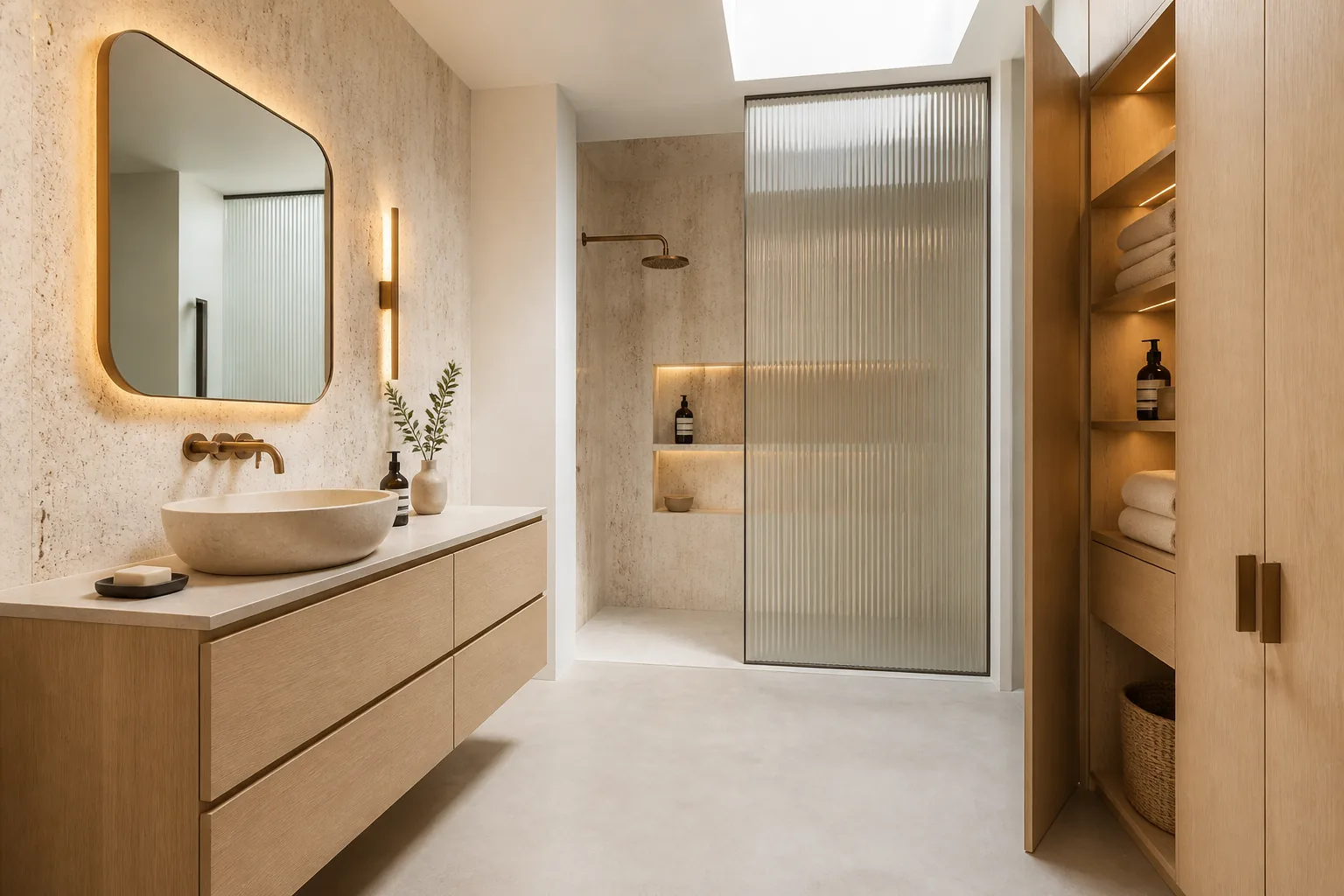
Natural stone and wood provide variation that many projects value, but samples cannot predict every vein or grain. Manufactured surfaces, porcelain and engineered panels can offer more consistent appearance across apartments or hotel rooms. The best choice depends on whether uniqueness or repeatability is more important.
Review maintenance before approval
Ask who will clean the room, which products they will use and how damaged components can be replaced. A slightly simpler material palette with accessible joints and replaceable parts often performs better over the life of a project.
Coordinated selection
Products to resolve as one system
Cabinet construction
Compare plywood, solid wood and aluminum options against humidity, design and budget.
Explore the guide ↗Wet-zone surface
Coordinate wall finish, shower glass fixing and waterproofing before site installation.
Explore the guide ↗Floor and wall tile
Resolve size, slip performance, grout and transitions as part of the layout.
Explore the guide ↗Visual references
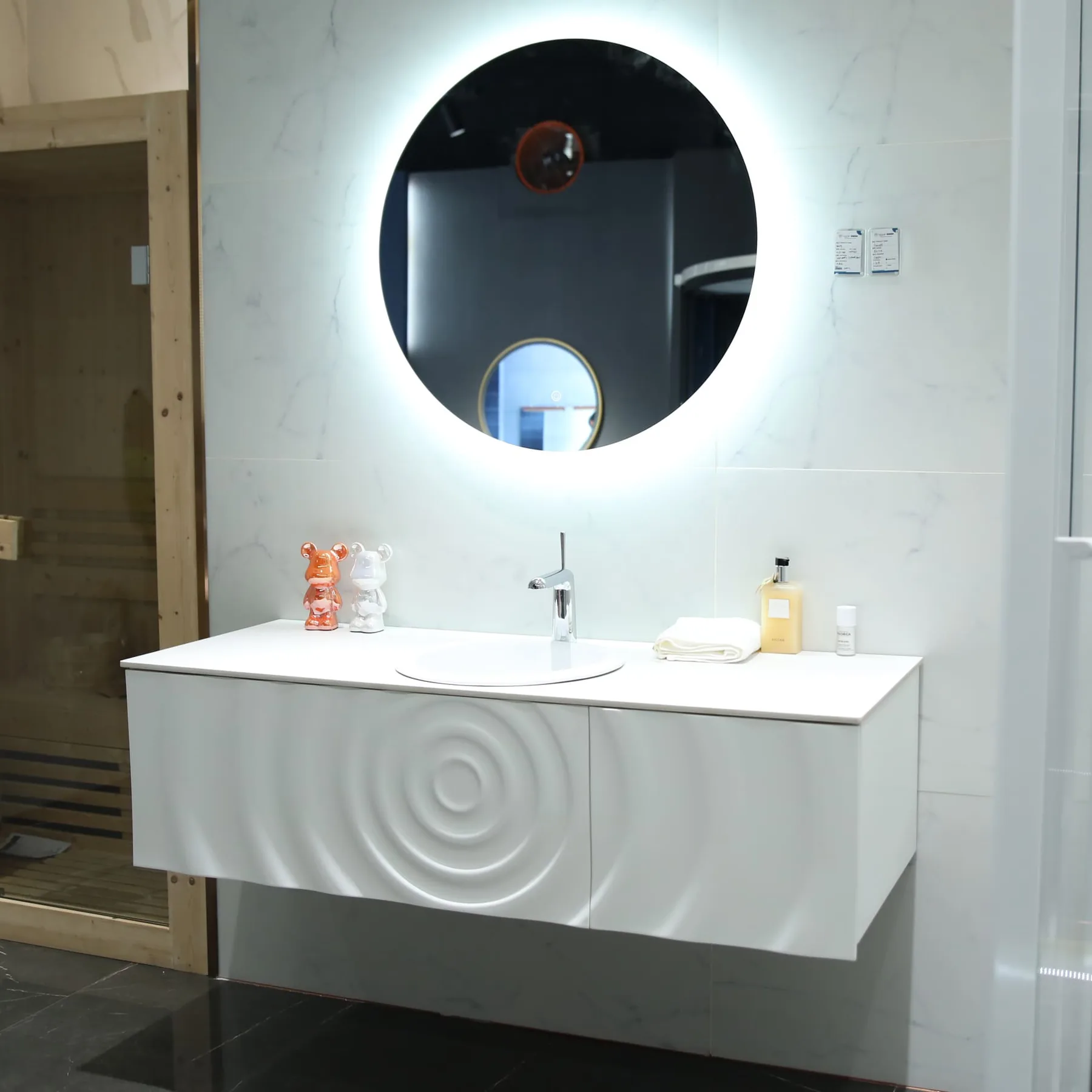
See the decisions together
Questions answered
Planning FAQ
What is the most practical bathroom floor material?+
Porcelain tile is widely used because it is durable, water resistant and available in many formats. The exact choice still requires suitable slip performance, correct substrate preparation and compatible grout.
Can natural wood be used in a bathroom?+
Wood can be used when the species, construction and protective finish suit humid conditions and direct water exposure is controlled. Engineered or wood-look alternatives may offer more predictable performance for large projects.
What information should be included in a material schedule?+
Record product code, finish, size, thickness, edge detail, installation zone, substrate, grout or joint specification, quantity and approved sample reference.