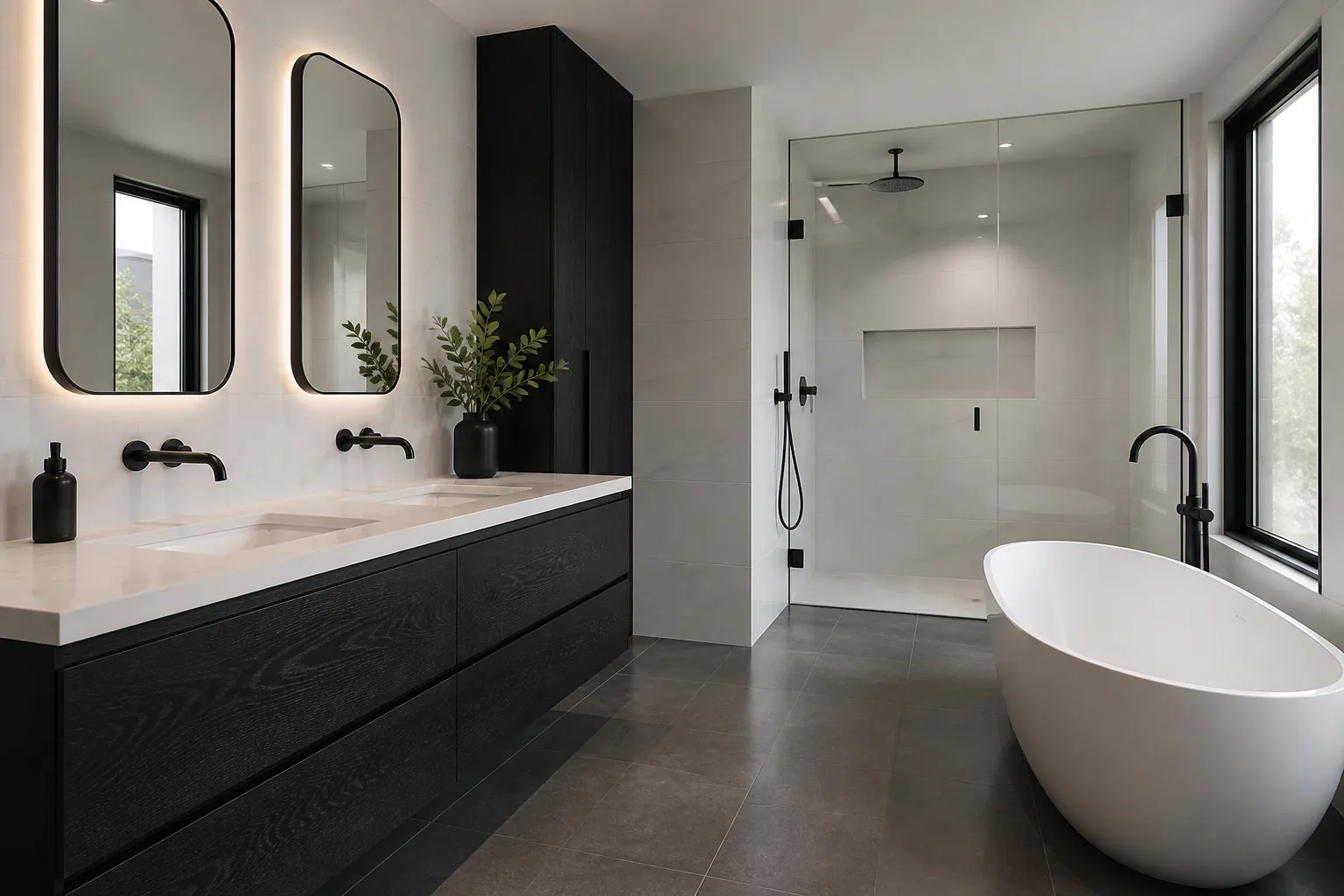
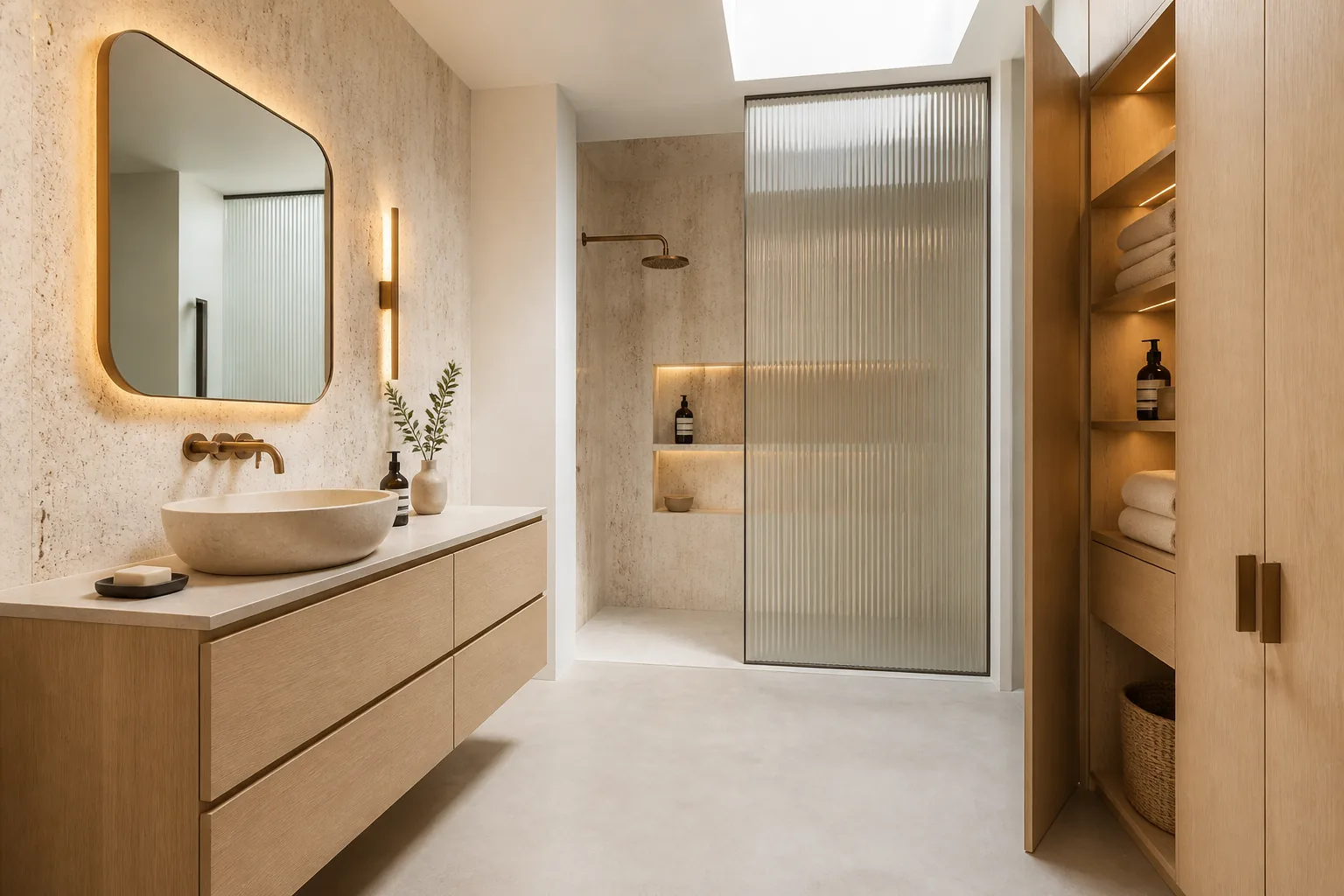
The most durable modern bathroom color schemes use one quiet base, one material-led cabinet tone and one repeated metal finish. Contrast should clarify the room rather than divide it into unrelated surfaces.
Modern bathroom color is less about selecting a fashionable paint chip and more about coordinating every fixed surface. Tile, stone, cabinet fronts, countertops, sanitary ceramics, glass hardware and lighting all change how a color reads.
Use a three-part palette
Begin with a base tone for the largest wall and floor areas. Add a material tone through the vanity or a controlled feature surface. Finish with a metal accent repeated across the products people touch. This approach is easy to communicate to designers, procurement teams and factories.
Warm white with oak feels softer and more residential. Grey with walnut suits contemporary hospitality. Black and white creates stronger geometry, while sand and brushed bronze support an organic-modern direction.
Test color with the actual materials
Gloss, texture and grout can shift a palette as much as pigment. A white glossy tile reflects fixtures and daylight; a matte stone-look tile absorbs more light. Review samples together under the intended color temperature instead of approving each item in isolation.
Plan consistency across multiple rooms
Hotels and apartments benefit from a controlled finish schedule. One main palette can have limited approved variants—such as two cabinet finishes or two hardware finishes—without turning every room into a separate procurement exercise.
Keep replaceable accents flexible
Use towels, artwork and small accessories for colors that may change. Fixed products should carry the long-term palette. That balance keeps the room visually current while protecting the investment in cabinets, tile and plumbing fixtures.
Coordinated selection
Products to resolve as one system
Cabinet finish
Use the vanity as the main color anchor and check the finish under the project lighting.
Explore the guide ↗Metal finish
Repeat one dominant faucet, shower and accessory finish to reduce visual noise.
Explore the guide ↗Tile field
Choose the largest visual field first, then coordinate grout and transition details.
Explore the guide ↗Visual references
See the decisions together
Questions answered
Planning FAQ
What colors make a modern bathroom feel timeless?+
Warm white, soft grey, sand, charcoal and natural wood tones are reliable because they can be refreshed through accessories without replacing fixed finishes.
Should all bathroom metal finishes match?+
They do not have to be identical, but repeating one dominant finish across faucets, shower controls and accessories creates the clearest specification and the most consistent result.
Can dark colors work in a small bathroom?+
Yes. Use dark tones on a controlled cabinet, floor or feature surface, maintain good task lighting and keep the remaining envelope visually continuous.