Light the face from the front and sides, then use ceiling light for the room. A single downlight above the head often creates unhelpful shadows.
Vanity lighting is task lighting. It should help users see faces and colours clearly without glare, harsh shadows or an over-bright reflection.
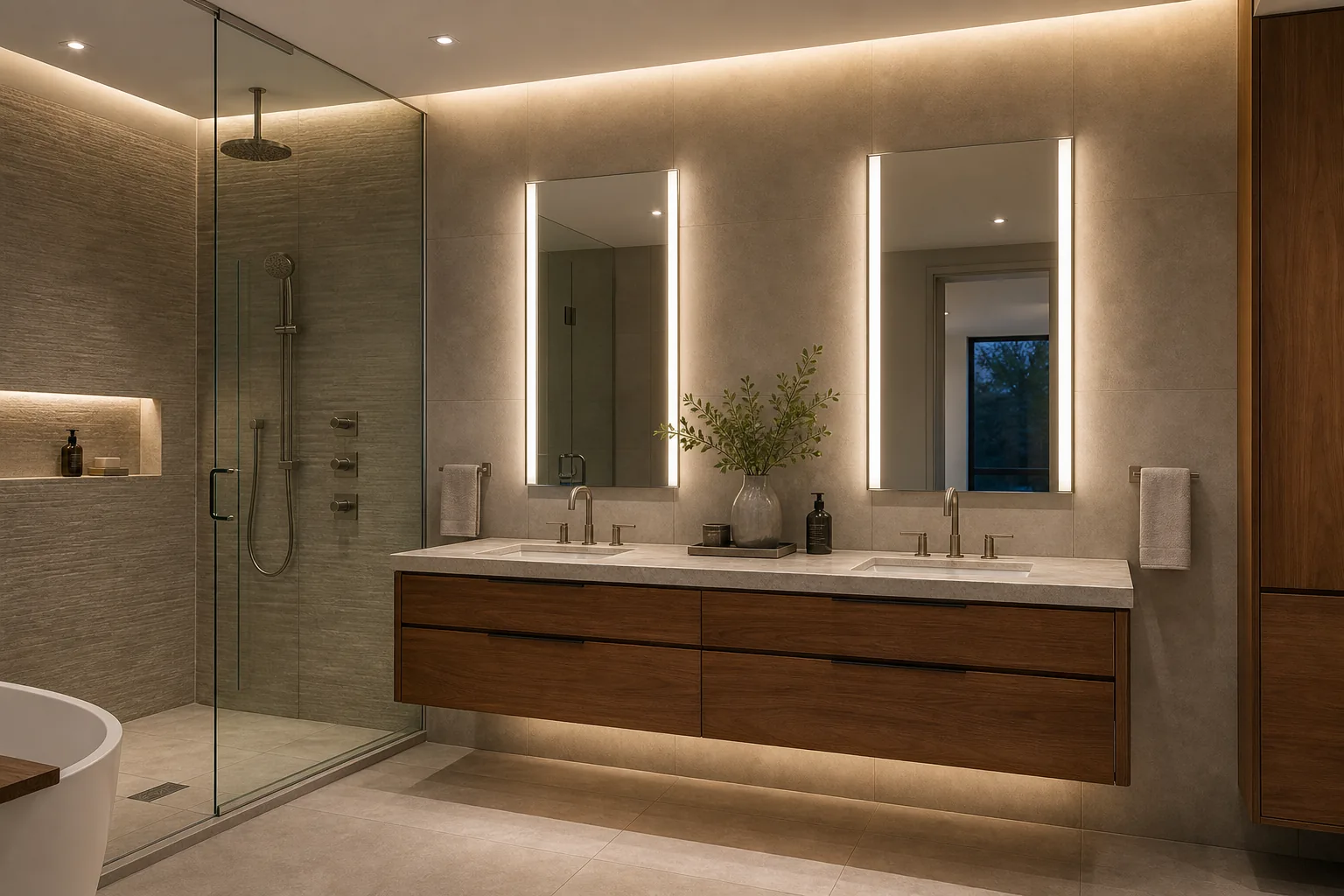
Light vertically where possible
Integrated mirror strips or sconces on both sides can illuminate the face more evenly. If the design uses one fitting above the mirror, check its projection, beam and relationship to the user rather than relying on appearance alone.
Coordinate mirror, basin and user positions
Set out the basin centreline, faucet, mirror, lights, outlets and cabinet doors on one elevation. Double vanities may need two lighting zones or a continuous solution that remains even across both users.
Specify light quality and control
Review colour rendering, colour temperature, dimming compatibility, driver access and glare. Separate task and ambient circuits can support bright morning use and a softer evening mode.
Follow destination electrical rules
Bathroom electrical zones, ingress protection and installation requirements vary. The project’s licensed electrical professional must confirm the final fitting and location.
Coordinated selection
Products to resolve as one system
Mirror and light package
Coordinate mirror dimensions, drivers, switching, demisting and electrical zones before wall closure.
Explore the guide ↗Visual references
See the decisions together
Questions answered
Planning FAQ
What is the best position for vanity lights?+
Light near both sides of the face generally reduces shadows. Exact height and spacing should suit mirror size, user range and the selected fitting.
What colour temperature is best for a bathroom mirror?+
A neutral-to-warm range is common, but consistency with adjacent lighting and good colour rendering are more important than choosing one universal number.