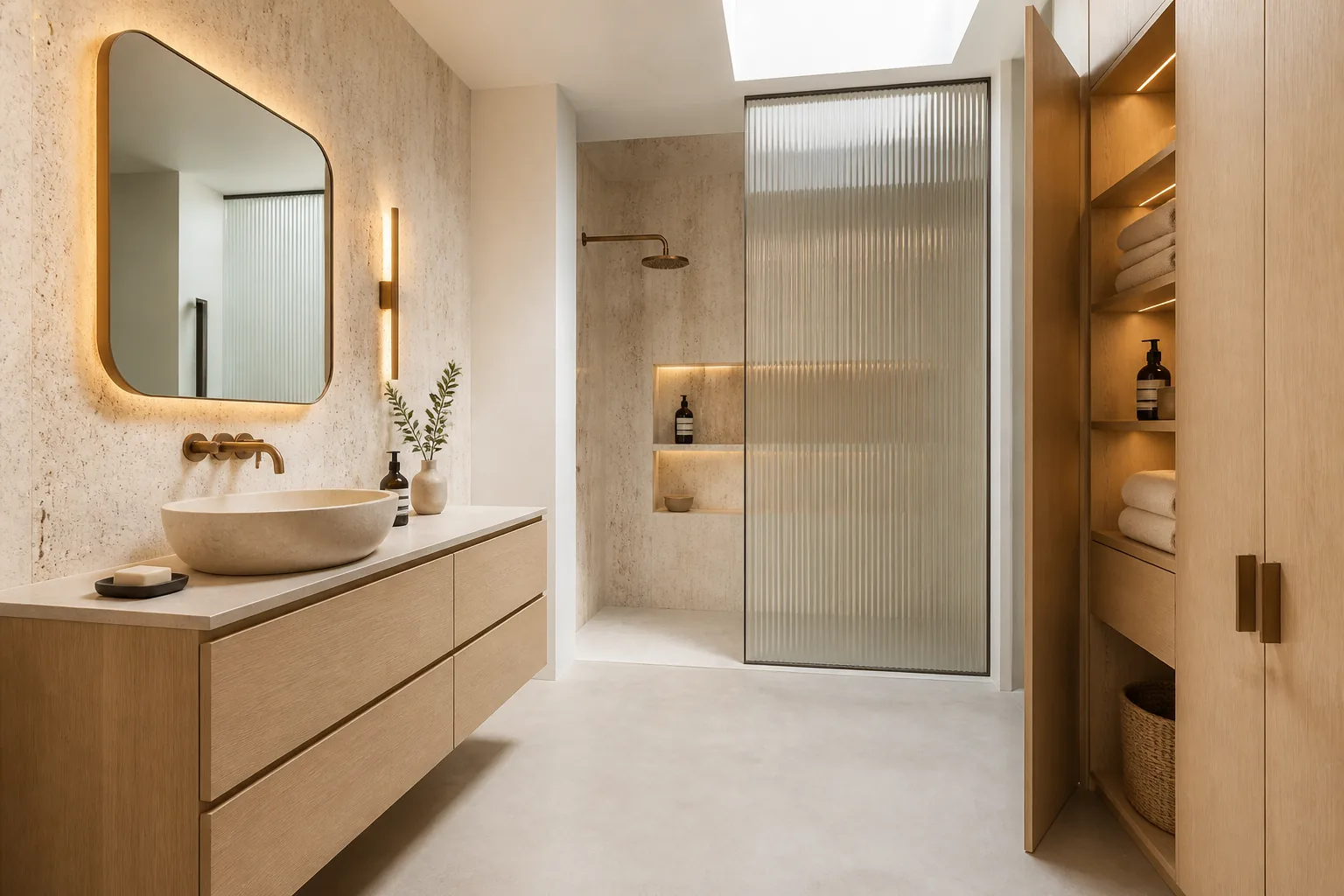
Organic modern design pairs simple geometry with natural-looking texture. Its success depends on moisture-suitable materials, restrained variation and careful junctions.
Organic modern bathrooms feel calm because the materials carry the visual interest. They do not need many decorative objects or abrupt colour changes.
Use simple shapes as the framework
Choose a clear vanity block, generous mirror and straightforward shower glass. Curved basin or bath forms can soften the scheme, but keep the main alignments controlled.
Select natural texture for the right zone
Stone, stone-look porcelain, sealed timber or timber-look panels and mineral-effect surfaces have different moisture, cleaning and repair requirements. Place each material where its performance is appropriate.
Keep variation intentional
Natural-looking products can vary substantially. Review full slabs, tile faces or cabinet samples and define acceptable range for large orders. Use quiet grout and sealant colours that do not interrupt the surfaces.
Add life through light and planting carefully
Daylight and warm, high-quality artificial light reveal texture. Plants should suit the actual light and humidity; they are an optional layer, not a substitute for ventilation or a resolved material palette.
Coordinated selection
Products to resolve as one system
Timber-look vanity
Review substrate, edge sealing, hardware and maintenance as well as the visible grain.
Explore the guide ↗Visual references
See the decisions together
Questions answered
Planning FAQ
What defines an organic modern bathroom?+
Clean forms are combined with natural-looking stone, timber, mineral textures and soft neutral colour. The composition remains edited rather than rustic.
Can real wood be used in a bathroom?+
It can be used when the species, construction, finish, ventilation and placement suit the moisture conditions. Product care instructions and project detailing remain essential.