Grey feels inviting when its undertone is consistent, its surfaces vary in texture and the lighting has enough warmth and colour fidelity.
Grey remains useful because it can connect stone, metal, ceramic and timber. The risk is a room where every surface is the same medium tone.
Choose the undertone first
Place candidate greys beside the project’s white ceramic, countertop, timber and metal samples. A cool blue-grey and a warm beige-grey may both look neutral alone but conflict when installed together.
Vary value and texture
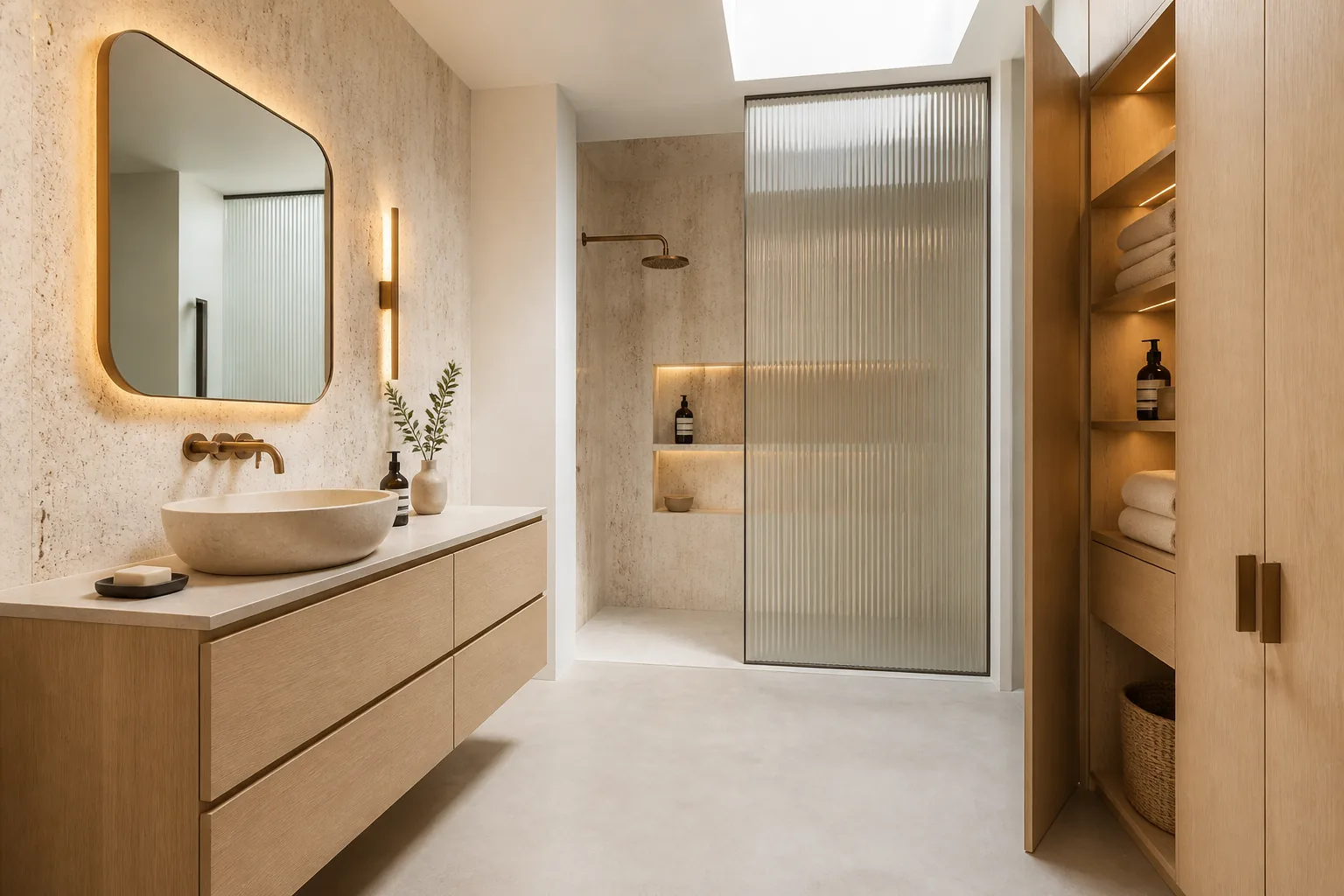
Use a pale wall, medium floor and deeper cabinet or hardware accent. Combine one expressive stone pattern with quieter surrounding surfaces. This creates hierarchy without leaving the grey family.
Test the lighting
Review samples in daylight and under the proposed mirror and ambient lights. High colour rendering and a considered colour temperature help reveal material warmth accurately.
Approve a physical control sample
For multi-room projects, retain an approved sample board with tile batch, grout, cabinetry, countertop and metal finishes. Digital images cannot control subtle grey variation.
Coordinated selection
Products to resolve as one system
Warm timber vanity
Use cabinet colour and grain to introduce warmth without adding another hard-surface pattern.
Explore the guide ↗Visual references
See the decisions together
Questions answered
Planning FAQ
What colours warm up a grey bathroom?+
Natural wood, warm white, clay tones and brushed warm metals can soften grey. Choose them against the actual grey undertone under project lighting.
Can you mix different grey tiles?+
Yes, when their undertones and visual scale are compatible. Compare full samples together because small chips can hide pattern and colour variation.