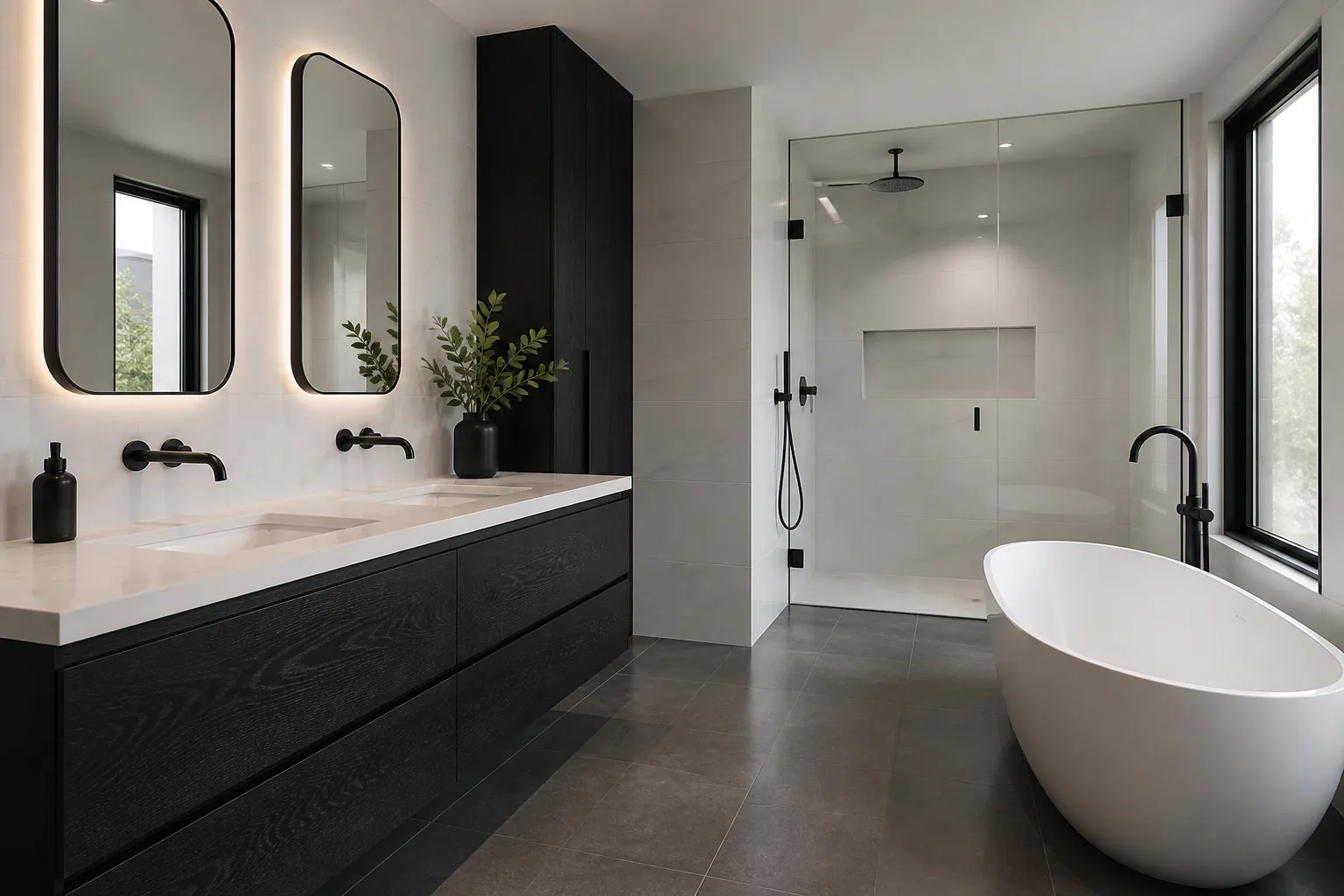
Use white for the largest light-catching planes, black to define selected edges, and texture or timber to keep a monochrome bathroom from feeling flat.
Black and white is a structure, not a decoration. Decide which surfaces should recede and which should frame the room, then keep the contrast controlled.
Give white the light-facing role
White or pale walls near mirrors and windows reflect useful light. Black works well on a vanity, floor, frame or feature plane where it can anchor the composition without closing the room.
Add variation through texture
Combine matte cabinetry, lightly veined stone, glazed ceramic and clear glass. Texture makes two colours feel layered. A restrained timber element can soften the contrast and connect the bathroom to adjacent interiors.
Repeat hardware carefully
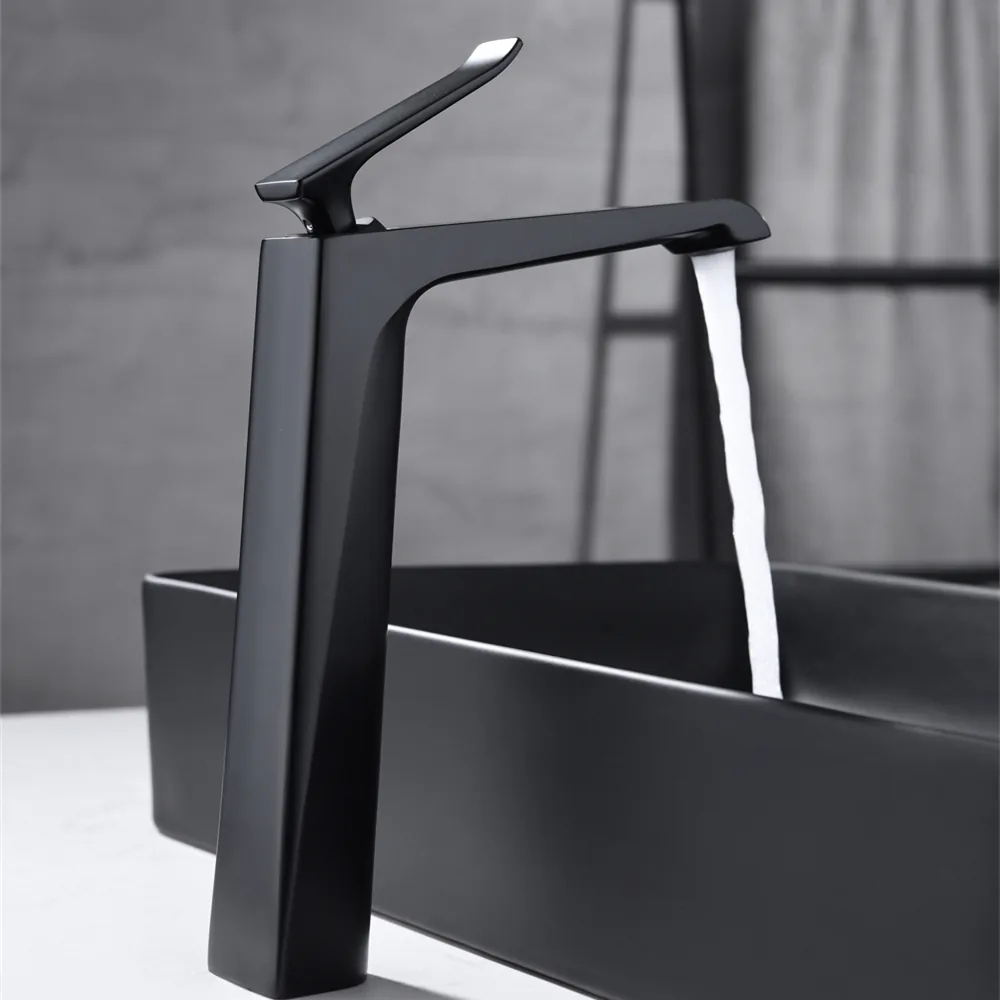
Use one dominant metal finish for faucets, shower controls, glass hardware and accessories. Ask for physical samples: products described as “matte black” can differ in tone, gloss and texture between ranges.
Plan cleaning with the palette
Choose grout, sealants and surface treatments with local water conditions in mind. The most successful monochrome room is one that still looks intentional after daily use.
Coordinated selection
Products to resolve as one system
Matte black faucet family
Check whether basin, shower and bath fittings are available in a consistent finish.
Explore the guide ↗Visual references
See the decisions together
Questions answered
Planning FAQ
How much black should a bathroom use?+
There is no fixed ratio. Base the decision on daylight, room size and maintenance, then concentrate black on a few deliberate planes or product families.
Do black bathroom fixtures show water marks?+
Dark finishes can show mineral residue. Water quality, cleaning routine and the exact coating influence maintenance, so confirm care guidance before selection.